Saturday, July 27, 2013
Tuesday, July 23, 2013
The Re-n*ggerizing of the Black Professional Class
While giving an interview, Dr. Cornel West made an
interesting observation when discussing President Obama. He said that there is a “re-n*ggerizing” of
the Black professional class (about 27 minutes into the interview). In other words, the professional class of
Black folks refuse to say anything negative about the President or his criminal
agenda, in order to prevent the President from looking bad to others and “taming”
the anger toward the President among lower class Blacks. Through these actions (or lack thereof), true
progress and equality among Blacks are further worsened. Let’s explore this, in terms of “justice.”
The United States of America has a history of slavery, black
codes, and Jim Crow. The criminal
justice system was used as a method of social control to further oppress
Blacks. In other words, Blacks were more
likely to be arrested, jailed, denied due process rights, convicted,
incarcerated, etc. Several law
enforcement officers, attorneys, and judges were overtly racist, which further
perpetuated and deepened the distrust between Blacks and criminal justice
practitioners. If these problems are to
be adequately addressed, are we losing potential progress through the re-n*ggerizing
of the Black professional class?
Without discussing the truth (or not!) of Dr. West’s point,
let’s further examine the role of Blacks (regardless of social class) in
helping achieve justice in this country.
The “clients” and residents of the criminal justice system are
disproportionately poor and minority.
Once convicted, regardless of the sentence, they are now convicted
offenders. Depending on the offense, it
could eliminate the ability to receive financial aid for higher education. We have a public school system that is
systematically biased (e.g., school resources, funding, college prep classes,
etc.) against poor people. There is a
blocking of legitimate job opportunities in lower class communities. All of these issues increase the likelihood
of criminal behavior, and once convicted, the probability of committing
additional crime increases.
Unfortunately, when there is a disproportionate number of minorities living
in lower class areas, minorities (especially Blacks) suffer serious social
ills.
During all of the major movements in American history (e.g.,
Civil Rights Movement, Gay Rights Movement, Women’s movement, etc.), those who
participated focused on the human/natural rights of everyone. In other words, Whites were protesting with
Blacks to help fight legal segregation.
Heterosexuals were protesting with gays to help fight legal definitions
of marriage. Black professionals must
protest with lower class Blacks (along with other races/ethnicities!) to fight
a criminal justice system and criminal laws that have been deeply
discriminatory against Blacks since their beginning. How much longer must we deal with a system
that is openly racist! This is a
human/natural rights’ issue! If the
Black professional class is being re-n*ggerized (per Dr. West’s assessment),
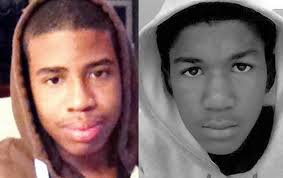
the tragic shooting of Trayvon Martin should demonstrate that Black boys
(regardless of social class) are susceptible to negative outcomes because of
profiling and implicit/subtle racism.
Are the Black professionals being re-n*ggerized, in order to
shield Obama, resulting in further injustice among other Blacks (especially
those in lower social classes) in the criminal justice system? This is an interesting and very appropriate,
question.

Saturday, July 20, 2013
Race and Justice, in Light of George Zimmerman Verdict

While the George Zimmerman not-guilty verdict has been viewed by many as an injustice, we cannot lose site of the underlying issue: discrimination within the criminal justice system. While Trayvon Martin is one individual life, he has come to be the face and motivation for a movement that has impact far beyond this one case. The criminal justice system, both historically and currently, is systematically biased against males, the young, and African-Americans. The group most biased against, though, is the combination of those factors: young African-American males. This group is more likely to be sentenced harshly, along with being viewed as the most "dangerous" and "blameworthy" of any other group.
What accounts for this view of our Black males? Is it the disproportionate percentage of arrests by Blacks? Is it the depiction of Black males in the media (e.g., movies, music videos, news, etc.)? Is it the fairly large percentage of Blacks who are currently incarcerated in our nation's jails and prisons? Is it simply racism, which may be passed down generationally among non-Blacks? Is it the systematic bias against Blacks in our nation's schools, which leads to social ills? While there are many more questions to be asked, the answer most likely falls within all of these issues.
George Zimmerman did profile Trayvon Martin, but we should not forget that Zimmerman does not hold a view that is significantly different from other people or entities: criminal laws, the criminal justice system, employment opportunities, educational system, some non-Blacks, and even some Blacks themselves. It is in this venue that the movement in the aftermath of the verdict should be focused. Trayvon "fit" the description of those viewed most dangerously in the United States. There are many more Trayvon Martins in the United States, which transcends social class and neighborhoods. How will Black life continue to be viewed and portrayed? As long as there continues to be negative values attributed to African-Americans (especially the young males) and systematic discriminatory laws and practices, the current movement that has the face of Trayvon will be done in vain.
Sunday, December 16, 2012
Race and "Stand Your Ground" Laws
Is the law racist?
Probably not. Does the law
increase the probability of force being used against Blacks? Probably so.
Let’s explore this issue. Prior
to stand your ground laws, most states’ self-defense laws were based on
something called the “Castle doctrine.”
This doctrine allowed for people to use force (including deadly) in
their homes without having a duty to retreat.
They did have the duty to retreat outside of their homes. The Castle doctrine makes sense. If there is an intruder in your home, the
threat is real, imminent, and having to retreat is no longer reasonable. Use of force, including deadly force, is a
reasonable option in order to protect yourself and the lives of your family. There is not much of a racial element to the
Castle doctrine.
Stand your ground laws, though, remove the “duty to retreat”
requirement from places outside of the home.
As long as someone has a legal right to be in the location and have “reasonable”
fear for his/her life, force can be used.
Again, force can be used without having a duty to retreat. What is reasonable? This is where the element of race/ethnicity
is so relevant. Research (which I will
be happy to provide to those interested) shows that young people are viewed
more dangerous than older people; males are viewed more dangerous than females;
Black are viewed more dangerous than others.
Although these factors, alone, are powerful, the most powerful is the
combination of the three: young Black males.
Young Black males are viewed very dangerously, not only in general
society, but in important decision points in the criminal justice system (e.g.,
arrest, sentencing, etc.). Again, this
group is the victim of society’s prejudices.
When young Black males are in society, it presents a fear
among many. This is where the “reasonableness”
for fear from stand your ground laws become relevant. Is it reasonable to fear for your life when
in the presence of this group? Even if
words are exchanged or a fight ensues, is it still reasonable to fear for your
life? In the Trayvon Martin case, race appeared
to have played a role in why the initial confrontation took place. In the Jordan Davis case, the shooter felt “threatened”
because he “saw” a gun (though there was no gun) in the tinted car of young
Black males. Again, these laws are allowing
non-law enforcement citizens to determine “reasonable fear” among a group that
research has shown to be viewed dangerous.
People’s unfounded prejudices clearly are playing a role, and state laws
create the environment for these prejudices to result in actions.
Unfortunately, because stand your ground laws don’t require
a duty to retreat (even when not in your home), people are given the power to
determine what is reasonable. Law
enforcement officers are trained extensively on when force can be used, but
state legislatures have provided the very untrained general population with the
authority to determine this standard when outside of their home, since there is
no duty to retreat. As I mentioned at
the beginning, are stand your ground laws racist? Probably not.
However, do these laws allow for an increased probability of force being
used against certain groups? Take a look
at judge for yourself. What are your
thoughts?
Thursday, December 13, 2012
Social Class and Right to Work Laws
Unfortunately, Michigan's legislative body passed the Right
to Work bill and it was signed into law by the Governor. Instead of looking at this on the surface,
people must look beyond the political rhetoric.
Right to work laws weaken unions, which also mean that collective
bargaining is also weakened. Collective
bargaining has been tied to better wages, better healthcare, domestic partner
benefits, regular and fair raises, etc.
When workers are not required to pay into the union, but reap the
benefits of the union, the available funding for the unions to bargain and
fight unfair labor practices will ultimately decrease. The strength of the unions (based on the
number of members) is decreased. The
people who are disproportionately impacted by these laws are the following:
- Socially/politically disadvantaged Americans
- Ethnic minorities
- The “have nots”
There is a sociological/criminological theory called
Conflict Theory. Its basic premise is
that laws are written on behalf of the “haves,” in order to control the “have
nots.” We must ask ourselves if Right to
Work laws are created in order to allow the “haves” to keep more of their
financial capital, given that strong unions threaten that very idea. Generally speaking, unions serve the needs of
the “have nots,” which is comprised of many Americans who are socially
disadvantaged. If unions are weakened,
it will have a direct negative impact on these groups. As mentioned in other posts, the socially
disadvantaged are disproportionately comprised of Blacks and Latinos (though a
large percentage of Whites are also in this group). When these groups start having fewer
benefits, less take-home pay (given less cost of living adjustments), unfair
labor practices, it results in an increased amount of social ills in minority
communities. Again, I strongly encourage
people to look beyond the rhetoric and see which groups are more likely to
suffer as a result of these laws.
What do you think? Do
you believe Right to Work laws directly (or indirectly) target particular
groups?
Wednesday, December 12, 2012
The Real Impact of the Fiscal Cliff
If two federal branches of government (Legislative and Executive) don't reach an agreement soon, we will go over the "Fiscal Cliff." Unfortunately, this would risk the possibility of sequestration, which is automatic federal spending cuts, along with an expiration of the Bush tax cuts. For Americans, that means we'll get less from federal programs while bringing home less net pay.
Many (not all) Republicans discuss upper-class Americans and small businesses. Many (not all) Democrats discuss middle-class Americans. Why isn't there more of a focus on socially disadvantaged Americans, who are disproportionately more likely to be Black and Latino? Unfortunately, this group is silenced from multiple salient arenas (e.g., political, economics, social justice, voting, etc.), and the fiscal cliff is no different. The fiscal cliff will result in legislatively mandated cuts in federal programs that many socially disadvantaged people rely on (e.g., unemployment benefits), given the structural lack of opportunities in those communities. In an already extremely tough environment, our government representatives will allow this group of Americans to deal with yet another circumstance that limits opportunities and results in additional "symptoms" to social ills (infant mortality, crime, disadvantaged neighborhoods, etc.). When will people remember this group?
The fiscal cliff and sequestration are extremely important. We cannot ignore the group of people who will have the hardest time recovering from this drastically difficult circumstance, even if it occurs for only a couple of weeks. When we see social ills occurring disproportionately in socially disadvantages areas, it's important to remember things like the fiscal cliff and sequestration before people start saying how social ills are based on personal responsibility.
What do you think? Do the fiscal cliff and sequestration have a disproportionately stronger (negative) impact on socially disadvantaged Americans?
Welcome to the Race, Social Class, and Politics' Blog!
I would like to welcome you to my blog! My goal is to provide a critical look at United States' politics, with a focus on race/ethnicity and social class. Historically, the role of race and social class in politics was very overt. For instance, American Indians/Native Americans were legally required to move west of the Mississippi River. Blacks are written into the Constitution as three-fifths of a person. Contemporary politics and laws, though, are very different. The racial/social class impact is much more subtle, where it is not readily identifiable. The purpose of this blog is to highlight the true impact of American politics and provide insight on the groups that are often underrepresented in discussions. I look forward to us going through this journey together!
Subscribe to:
Posts (Atom)